

Strength and Conditioning for Pickleball
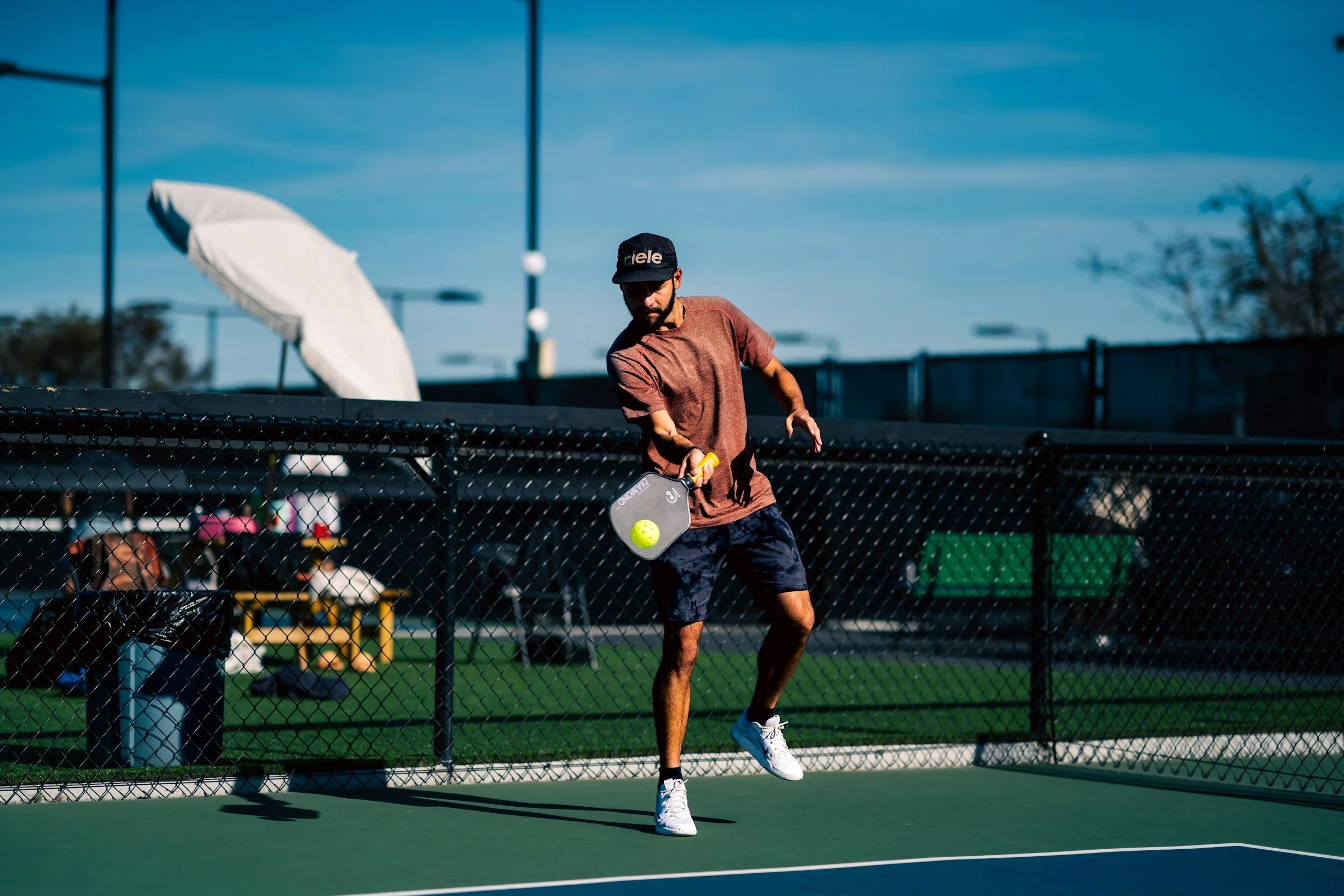
Like any sport, pickleball has some unique demands. But the fundamental strength lifts should still be the staples in your training program.
Pickleball is by far the fastest-growing sport in America. Participation has grown by 223% over the past three years, according to the Sports and Industry Association. This makes it the third most popular sport, after running and cycling.
A dedicated facility recently opened here in Skokie, Illinois, and local parks and districts are scrambling to add courts.
Increased participation means increased competition.
In this article, I’ll cover the movements and training strategies that will separate you from the crowd.
Building a Training Program
As with any sport, long-term success begins with a general foundation of strength and athleticism. You’ll want to focus most of your initial training on compound lifts and aerobic fitness, with a complement of anaerobic work.
As your training progresses, you can shift toward more sport-specific movements.
Most recreational players will benefit from a simple program. Two days per week of strength training and conditioning will provide excellent results. You can adjust the duration and intensity based on factors such as work deadlines, family obligations, and travel.
Let’s say you’re a tax accountant. Your training will slowly lessen heading into March, with a focus on restoration and stress relief. As you head into May, you’d slowly ramp up your workouts again.
Higher-level pickleball players, by contrast, typically do best with a periodized program. This means their program would incorporate structured off-season and pre-season plans. These periods would focus on specific goals in preparation for a competition season.
Understanding the Physical Demands of Pickleball
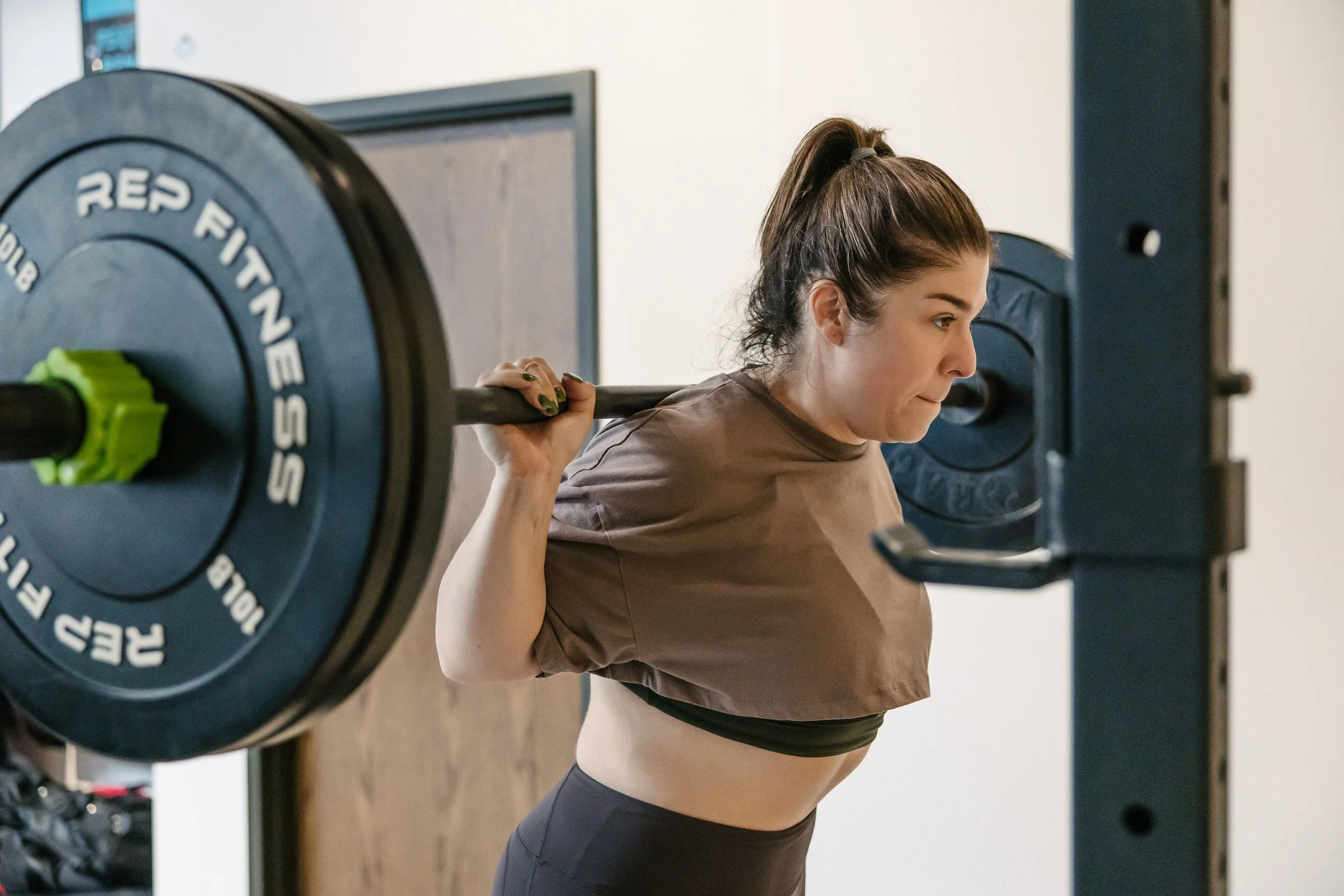
You can substitute a goblet squat if you’re intimidated by barbell squatting
Let’s first unpack the sport’s athletic characteristics.
This sport requires:
Quick lateral movement and change of direction
Explosive power for serves and smashes
Core stability for balance and rotational movements
Upper body strength and coordination for consistent shot-making
Endurance for long rallies and extended play
With this knowledge can identify best pickleball exercises and the appropriate workload.
Foundational Pickleball Fitness
Strength training for pickleball begins with building a strong base. In most cases, that means creating your workouts around compound lifts.
Compound lifts are multi-joint movements that target multiple muscles, like the barbell squat. You’ll work a large section of the muscles with fewer movements, making them highly efficient. They’re also infinitely loadable; you can always add a small amount of weight to the bar. To learn more about the main barbell lifts read my article here.
Your foundation should also include aerobic work and plyometric exercises across multiple planes.
Steady-state aerobic conditioning will provide the necessary endurance and recovery capacity to excel. Aim for 30-90 minutes of zone 2 heart rate work depending on your current experience level.
Overall, find a manageable weekly training volume and then increase incrementally. That means adding 1 set to your lifts per session or increasing your weekly running time by 10%.
It may seem silly to go from 20 minutes to 22. But a progressive approach preserves energy for your primary sport while reducing the risk of injury.
Specific weight-training exercises for pickleball
| Lower Body |
|
| Upper Body |
|
| Core Stability and Rotational Power |
|
Designing Your Pickleball Workout Plan
With the basic movements and principles in place, let’s develop a sample beginner program.
| Sunday: Lifting A |
|
| Tuesday: Conditioning and Core |
|
| Thursday: Lifting B |
|
| Friday: Aerobic Conditioning and Core |
|
Intermediate Programming
After about 6 months, you'll max out your gains with a beginner program. Plan to add a third workout session with more sport-specific exercises, or sprinkle them into longer lifting sessions.
These include practice drills and advanced variations:
Wall Ball Drills: Improves hand-eye coordination and shot accuracy
Shadow Swings: Enhances muscle memory for proper stroke technique
Reaction Ball Drills: Develops quick reflexes and hand-eye coordination
Unilateral Movements: Bulgarian split squats and single-leg hip thrusts will work balance and strength while eliminating potential weaknesses
Chest Presses: Complement your pushups by adding either a bench press or machine press that you can overload.
Advanced Programming

Advanced trainees benefit from a more structured, long-term form of planning known as periodization.
The primary consideration for more seasoned players: periodization. This refers to structured programming, typically broken into off-season, pre-season, and in-season workouts.
In addition to reflecting different seasons, periodization allows athletes to address individual needs within workout cycles. For example, players with shoulder or knee tweaks can vary the intensity weekly. Click here to learn more about periodization with this excellent article.
Advanced players will also want to incorporate some more dynamic workouts that vary tempo, speed, and tools. These include:
Tempo squats
Speed bench press
Dynamic landmine press and split jerk rotations
Olympic lifts
Rotational exercises, like a medicine ball throw
How to Train for Pickleball: A Holistic Approach
You will notice considerable improvements to your game if you incorporate strength training. Many people will enjoy a competitive advantage with smart programming that adapts over time.
If you truly want to take your game to the next level, however, you’ll need to master other areas.
Mental Preparation
Mental training becomes key as physical abilities converge. At elite levels, winning often comes down to tiny mental edges.
To begin, I often recommend George Mumford's The Mindful Athlete as a primer.
Overall, you need to learn to regulate your sympathetic and parasympathetic nervous systems. Visualization, meditation, and breathwork can assist with all three. I’ve also written a post on mindfulness in sport that you can head here.
Nutrition and Hydration
Many athletes focus on the minor details of their nutrition while missing the big picture. Gulping down a Gatorade will have minimal benefit if you’re lacking micro- and macronutrients.
Instead, take stock of your overall dietary patterns. Aim for good health with balanced meals rich in lean proteins, complex carbohydrates, and healthy fats.
If you’re eating generally well, experiment with meal timing and composition. Here are a few baselines from which you can adapt.
Plan to eat your last full meal 2-3 hours before either an intense practice or competition.
Aim for 50-75 grams of simple carbohydrates 30 minutes before. Good options include a banana with a serving of juice or a rice cake with jam. Some people also do well with a small serving of protein.
Consume your high-fiber and high-fat foods further away from playing, as they can slow digestion and gastric emptying.
If your match lasts more than 60 minutes, plan to repeat steps 2 right afterwards. If it stretches to 90 minutes or more, start sipping a sports drink at the 45-minute mark.
No hard-and-fast rule exists for hydration, but aim for at least 75 oz and adjust based on how you feel.
Recovery and Injury Risk Reduction
Any intense physical activity carries the risk of strains and flares.
For most of us, that’s a reasonable cost to bear for a sport that brings meaning and joy. But here are a few tips to limit the duration and intensity of tweaks.
Incorporate dynamic stretching into your warmup, including walking lunges and speed skaters.
Stay with technique in your lifting and playing. Many injuries occur from overloading the body in incorrect positions.
Cool down after practice. A few minutes of foam rolling, stretching, and relaxing signals to the body that you're entering into recovery mode.
Add dedicated recovery modalities like massage, sauna, yoga, or Pilates. The ones that work best will allow you to relax fully.
Conclusion
Amping up your training will lead to many benefits on the pickleball court. For beginners, a modest time commitment will yield huge improvements to speed, strength, reaction time, and resilience.
Sport-specific exercises for pickeball players become essential as you advance. Focus on skill acquisition and explosiveness.
Competitive players will want to consider periodized programming with special attention to recovery and load management.
The big picture: make sure your training supports your goals! If you enjoy pickleball as a fun outlet, try to make your training equally rewarding.
Sources and Links
Pickleball Continues Unprecedented Growth in Every Age Group and Region for Third Straight Year, Significant Investments Still Needed for Court and Facility Demand
https://sfia.org/resources/as-pickleball-continues-unprecedented-growth-in-every-age-group-and-region-for-third-straight-year-significant-investments-still-needed-for-court-and-facility-demand/
Pickledilly in Skokie, Illinois
https://www.pickledillyskokie.com/
