
Your Guide to Functional Strength Training
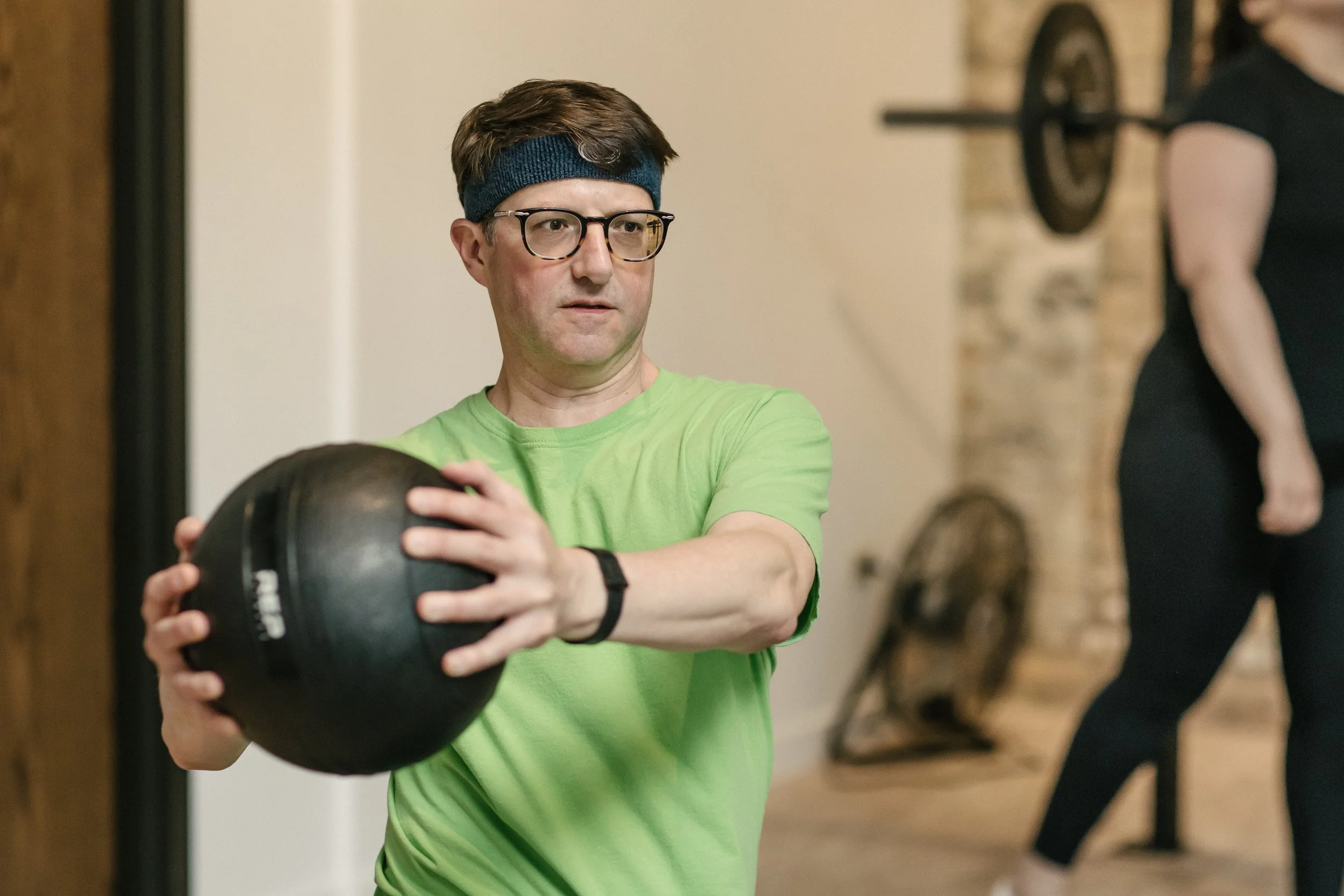
Functional strength training translates to life and sport, making it a very efficient form of fitness. Adding movements like medicine ball rotations, pictured above, creates balances athletes. Photo Credit: Becca Heuer
NOTE
This article is by far the most popular one on our site with over 20,000 views. We decided to update some recommendations based on new information or experiences with our client population.
Introduction
We all need physical and mental strength in our lives. Strength training equips us with enormous benefits. The list is long, from improving healthspan and cognition to giving us more energy for our families and careers. (To read more about these benefits, read my article at this link).
Any form of resistance training or weight training will generally produce results, whether machines, free weights, or resistance bands (click here for an overview of all types of strength training). But in the last decade, the fitness industry has moved toward a more holistic model, functional strength training.
This approach provides more efficient and optimal results for most people. This guide will explain the methods, principles, and programs you can use to build daily strength.
What is Functional Strength Training?
Functional strength training emphasizes a style of training that prepares people for the demands of everyday life. It focuses on movement patterns your body will likely tap into for many tasks, such as squatting and overhead pressing. You can think through your typical day to imagine some of these scenarios. Perhaps it's chasing your kids around the house or loading heavy garden supplies into your car.
Functional training also equips you to deal with unknown or unexpected physical tasks. For example, you may find yourself running to catch a flight while lugging 50 pounds of luggage (no judgment).
This training has the added benefit of scaling well to athletic activities, which makes it incredibly efficient. You can perform a single workout series that translates to more planned, structured outlets like endurance running.
Generally, a complete program will include the following elements:
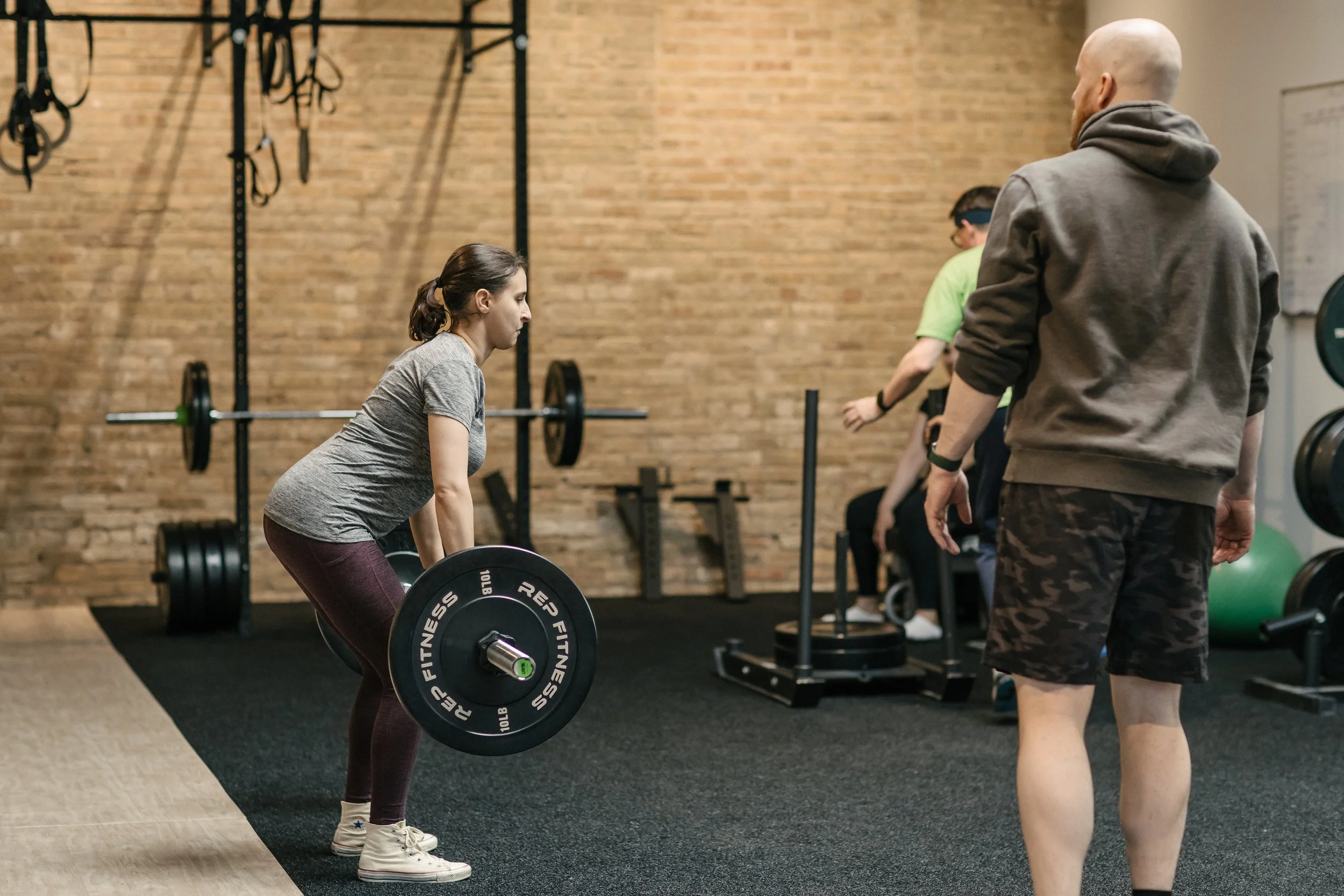
Focusing on movement patterns like the hip hinge can create more efficient workouts than emphasizing specific body parts or lifts.
Squatting
Hip Hinging
Vertical Pressing
Horizontal Pressing
Vertical Pulling
Horizontal Pulling
Core
These movements are primarily multi-joint or multi-planar. That means you will integrate multiple muscle groups and move in various directions. As such, you gain not only strength but also coordination, balance, and quickness.
Functional vs. Traditional Strength Training
Understanding the differences between these two modes is crucial for anyone looking to optimize their workout routine.
Traditional strength training typically focuses on muscle groups. For example, a program may call for working the arms one day with many isolation exercises like curls. This movement works the biceps well but requires little involvement from other muscles.
Functional training, by contrast, revolves around multi-joint movements (also known as compound exercises). Instead of bicep curls, for example, you might perform a chin-up. That's an example of a vertical pull since you move the body up and down through space. That's highly functional while working the biceps and several powerful back muscles, including the lats.
Time is another significant benefit of this approach. Your average workout will be short since you include so many compound movements. You can squeeze a highly effective session into 30 minutes.
The caveat to functional training is that it is not as effective for aesthetics or peak strength. While you will get bigger and stronger with core lifts like the barbell squat, those goals are secondary. If you have more specific interests, you should adapt your program accordingly to bodybuilding and powerlifting.
Functional Movements and Compound Movements
I listed above the core functional movements. Many of these are also compound movements since our bodies work as a musculoskeletal system. If you're preparing for daily life, you want your arms, chest, back, legs, and core to work in unison. If you're trying to hold a screaming 3-year-old, you don't have the option of only engaging your arms.
Below are those movements with specific examples. (You can learn more about the barbell lifts here).
Squatting - Barbell back squat, barbell front squat, goblet squat, single leg split squat, Bulgarian split squat
Hip Hinging - Barbell deadlifts, trap bar deadlifts, Romanian deadlifts, hip thrust
Vertical Pressing - Barbell overhead press, dumbbell overhead press, landmine press
Horizontal Pressing - Barbell bench press, dumbbell press, push-ups
Vertical Pulling - Pull-up, chin-up, lat pull, rack-assisted pull-ups
Horizontal Pulling - Barbell rows, Pendlay rows, single arm dumbbell rows
Core - Planks, Cossack squats, Copenhagen planks, side-lying hip adductors, med ball clams standing fire hydrants, Paloff press
Now, an important caveat to this non-exhaustive list.
As with most things in fitness, many of these movements exist along a spectrum from compound to isolation. Take lat pulls as an example. While these skew toward isolation, they still have a lot of utility. For the many people who struggle with pull-ups, they're a fantastic way to overload the lat muscles.
Functional training is a helpful framework, but we want to avoid dogmatism. Some people also really enjoy arm-isolation movements (myself included). In that case, adding those to your program makes sense since fun matters and adds only a few extra minutes.
Principles of Functional Strength Programs
Now that you have the basic concepts and movements, we can address some principles of a functional strength training program.
Progressive overload: Your fitness level will dictate your starting point. Generally speaking, every 4-8 weeks, you want to adjust your workouts. You can change movements, volume (total weekly reps), or intensity (weight). Avoid increasing volume and intensity at the same time.
Recoverability: Your recovery from session to session will guide your use of progressive overload. If you're getting good results while feeling close to 100% by your next workout, consider only minor changes to your program. If you're constantly sore and beat up in a way that affects your consistency, dial back on the volume or intensity.
Specificity: You can tailor your program based on your individual needs. For example, let's say your mobility limits your ability to get into a full squat. In that case, you can add warmup-specific drills to target your ankles and hips for 5 minutes. If you want to bulletproof your hamstrings because you play soccer, add three sets of isolation movements.
Enjoyment: It might seem strange to include a subjective term into a list of training principles. However, any experienced trainer knows that consistency trumps “optimization.” (This fact is supported in the literature, too). You’re more likely to hit the gym and accumulate quality reps if you enjoy the process. Plus, functional strength training emphasizes variety anyway. Take advantage of that flexibility to add your favorite movements.
Sample Functional Strength Training Routine
Here's an example of a beginner program. You can perform these functional strength training workouts for 8-12 weeks, progressing or regressing as necessary.
Session 1:
Barbell Back Squats 5x5
Push-Ups 5x12
Pull-Ups 4x10
Single Leg RDL 3x12
Paloff Press 3x8
Session 2:
Suitcase Carry 4x25 yards
Box Jumps 5x3
Dynamic Landmine Press 4x3
Landmine Side Lunges 5x8
KB Cleans 4×3
Session 3:
Trap Bar Deadlift 5x4
Cossack Squat 3x8
Barbell Row 4x8
Barbell Bench Press 5x5
Strategic Substitutions to your training routine
For several reasons you may want to vary the movements from those in the sample program. Typically, it’s because you’re seeking a novel stimulus, you’ve plateaued, or you’re injured.
You’re best off with an intentional approach to exercise selection. Here are a few of the main considerations based on the most common scenarios amongst our clients.
Bench press has plateaued. This is commonly the first big lift to stall because of the smaller muscles involved compared to the other main barbell movements. The simplest approach: swap pushups for a bench accessory targeting a weak point. For most people, more volume targeted to the specific lift does the trick. And in most cases, the spoto bench or the pause bench makes sense. Those variations target the sticking that typically occurs 1-2 inches off the chest as the weight gets heavier.
Shoulder mobility or back discomfort limits the barbell back squat. You have two main options in this situation. First, you can substitute your barbell squat with either a front squat or use a safety squat bar. Those involve similar mechanics so they’ll provide an excellent result. The second option: default to single leg variations like a Bulgarian split squat. While you can’t lead these as heavily or infinitely like the barbell version, they still provide an incredible quad stimulus.
Cranky shoulders or elbows make upper-body movements difficult. In our experience, 75% of issues will resolve by using a neutral grip. As often as possible, position your palms facing each other. You can use either dumbbells or a multi-grip bar for 4 weeks while limiting your direct arm work.
You can’t yet perform unassisted pull-ups. This is very normal! Most people will feel a little badly but they’re an unbelievably challenging exercise that requires long-term dedication. The best approach: progress with bands. Slowly add reps until that becomes too easy, and then find a lighter band. After you’re feeling confident, start to add negatives. This means that you’ll practice just the down portion of the pull-up. Just be patient.
Cardio and Conditioning
This article focuses primarily on strength training. However, the best overall functional fitness program will combine lifting with cardio.
While adding strength and lean muscle mass helps you age gracefully, cardio more directly correlates with longevity.
If you're not an endurance athlete or engaging in any cardio, add two days of zone 2 heart rate training for at least 20 minutes. You have two options for measuring heart rate. You can use a device, including a dedicated monitor like a chest strap or a smartwatch. If you prefer simplicity, exercise at an intensity at which you can maintain a conversation.
Schedule these two cardio sessions as you can within the proposed program. Over time, slowly increase the duration of your sessions, aiming for 45 minutes. Once you've got that down, add a third day of 20 minutes, and again gradually scale up.
Eventually, you'll want to hit a minimum of 3 hours of cardio per week. Add a short zone 5 heart rate session when you're in a good groove. These will be a 10-12 minute interval with short bursts of 15 seconds max effort followed by a rest of 30-45 seconds.
One important caveat: avoid the urge to mix your strength training into conditioning and vice versa. You can combine both into a single session of course. What we’re referring to is, for example, doing a superset of a max effort bench with burpees. These modes have different objectives and use different systems.
Conclusion
Functional strength training represents a paradigm shift towards a more practical and purposeful approach to fitness. Individuals can build more resilient bodies by focusing on movements that mirror real-life activities, integrating compound exercises, and designing personalized programs. Add cardio, and you're set up for a lifetime of health. For athletes, the approach fits seamlessly into your sport training.
Chris Van Nostrand is a strength and conditioning coach offering online and hybrid services out of Evanston, IL.